
Update: This is one of our more popular posts, but there have been some updates to this project since this post first went live. Thanks for reading!
- February 2017: Removing Paint from a Brick Fireplace, Pt. 2
- March 2017: Removing Paint from a Brick Fireplace: Pt. 3
- August 2018: Why We’re Painting Our Brick Fireplace
When we looked at this house for the first time, one of the first things we noticed was the painted brick fireplace. We loved the fireplace, but we knew that the paint on the brick would be one of the first things to go.
In the Syracuse University neighborhood, arts and crafts style homes and interiors are common. But what’s equally common is a thick coat of paint over brick, wood trim, and doors that give old houses their charm.
My personal favorite example from our house is where a previous owner painted over the metal damper handle.

Painted brick is notoriously difficult to reverse. So we researched quite a bit. There are tons of tutorials for painting your brick fireplace. There are not many tutorials for removing paint from a brick fireplace.
In fact, we found zero tutorials.
But we found some motivation on the blog 1914 Foursquare and their fireplace restoration project. We cobbled together a loose plan and got started.
Step 1: Gather supplies
The first step was to apply a chemical paint stripper to the entire fireplace. So we headed to our new favorite store, Home Depot, picked up four tubs of paint stripper and a few other supplies:
- Multi-strip paint and varnish remover
- Putty knives
- Cheap paintbrush (like this – something you don’t mind throwing away)
- Wire brushes (like these)
- Sponges
- Paint buckets
- Tarps
- Duct tape
- Painter’s tape
Step 2: Prep the space and apply paint remover
To prepare the space, we:
- Removed the furniture
- Removed the mantle
- Laid down a plastic tarp and taped it to the floor and walls, creating an airtight seals where the tarp would protect the hardwoods.
- Use painter’s tape, like Frog Tape, to do this. I used duct tape and it ripped up our walls.
Multi-strip has a gloopy, gelatinous texture. I expected it to be more like a paste that could be spackled on. We found it easiest to use a paintbrush and paint it on.
One the space is prepped, use a cheap paintbrush to apply a thick layer of paint remover on the entire surface of the fireplace.
And here’s a friendly reminder to remove things like mantes and switch plates when you’re painting. Here’s what we discovered when we removed the mantle:

Step 3: Wait
This may have been the hardest part. It’s hard to resist scraping paint when it’s practically bubbling off.

Step 4: Scrape the paint from your brick fireplace
After two days of letting the multi-strip work its magic, we put on our worst clothes and started scraping.
This was a messy process that took several hours. We methodically scraped, trying remove as much paint off the brick and mortar as humanly possible. We tossed the paint scraps into a garbage bag, and as we got more tired, we kept missing the garbage bag and stepping into jelly-like paint blobs.
Also: we bought nitrile gloves to protect our skin, but the multi-strip dissolved them right off of our hands.
Once we finished scraping, we scrubbed down the brick with metal brushes and warm water. Finally, we took sponges and warm water and gently rinsed off whatever remained on the brick. Then …
Step 5: Repeat
That’s right. We did this entire process twice.
Immediately after washing the brick, we went right back in with the multi-strip.
We applied a very thick second layer of multi-strip. We learned that the thicker we applied the multi-strip, the easier it was to scrape off. We let that sit for about 2 days, and then we repeated the entire process of scraping and scrubbing.

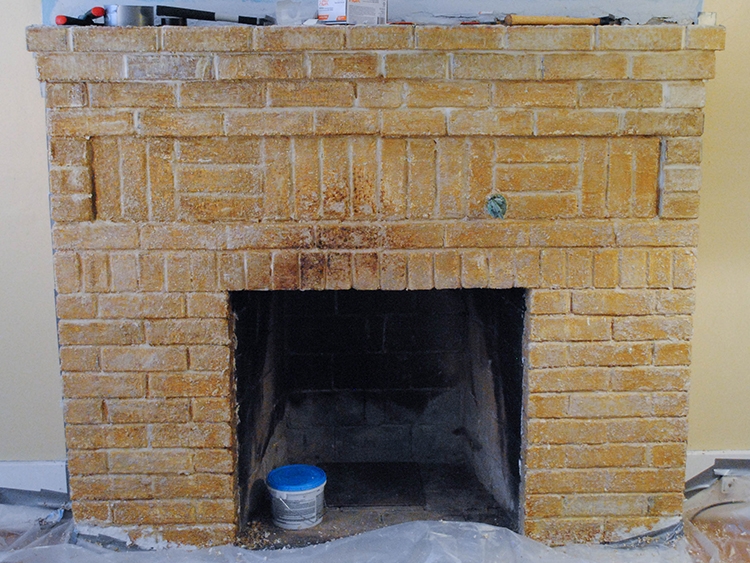
And then we were done! The end result:


While it’s not a dramatic change, it’s progress. We scraped off at least 3 layers of paint, including a layer of pink paint. Pink!
We scraped paint off the bottom line of bricks later. We wanted to be extra careful around where we could get water on the hardwoods.
The last layer of paint is an off-white paint that was barely affected by the multi-strip. We think it’s an oil-based paint, perhaps even a paint meant for exteriors. You can read more about how we tried to remove it in part two.
A couple things we learned from this project:
- Don’t put duct tape on your walls. It’ll rip the paint and parts of your wall clean off. Be smarter than us and use painter’s tape. We’re going to repaint our walls eventually so it’s not a huge deal, but the wall surrounding the fireplace looks pretty torn up right now.
- We loved using the multi-strip remover, despite how tedious this project was. It works well on latex paints, and it was satisfying to scrape off.
- Painting brick, or any masonry, is not a decision that should be made lightly because it is incredibly difficult, if not impossible, to reverse. If you’re thinking of painting or whitewashing a brick fireplace to help “brighten” your space, consider other options. That goes double if your home is older or even historic. As we’re learning, this change is almost irreversible unless someone is willing to put a lot of hours into reversing it (which is what we’re currently attempting) or a lot of money into replacing it. We’re not saying don’t do it … we’re just saying do not rush into painting a porous surface like brick or stone as a “quick fix” for your space. Because if you don’t like it, you’re stuck with it.